
Commercial and Industrial Epoxy Flooring
Epoxy, urethane cement and polished floors for plants, warehouses, kitchens, auto shops and showrooms in South Bend and Elkhart County.
South Bend Premier Epoxy Flooring applies epoxy flooring in Milford, IN, and does commercial floor coatings, garage floor coatings and basement epoxy for homes, farms and shops around Milford.
Request a quote
Tell us which floor and what it looks like today. We will call you back.
Milford is home to a maker of poultry, egg and grain equipment, and the farm buildings around it get hosed down often. A floor washed every day needs three things a garage floor does not: a slope that sends the water to a drain, a textured topcoat that stays grippy when wet, and a coating that stands up to hot water and cleaners. Urethane cement often fits better there than epoxy.

More than a third of Milford's houses are from before 1940, and the 1960s added the next biggest share. Most stand alone, and owners live in most of them.
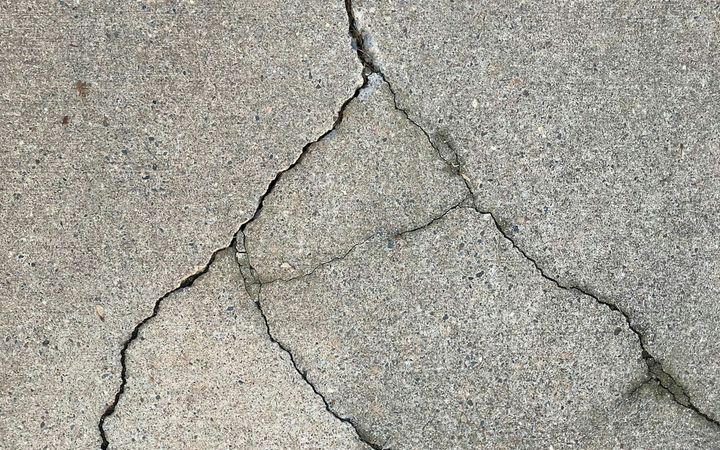
Some garages from before 1940 have a slab only a couple of inches thick, poured right on bare ground. Under today's trucks it cracks into plates that rock. A coating can't hold those together. So we check for movement and sound out hollow spots first, and if the slab rocks, it gets repaired or replaced before any coating.
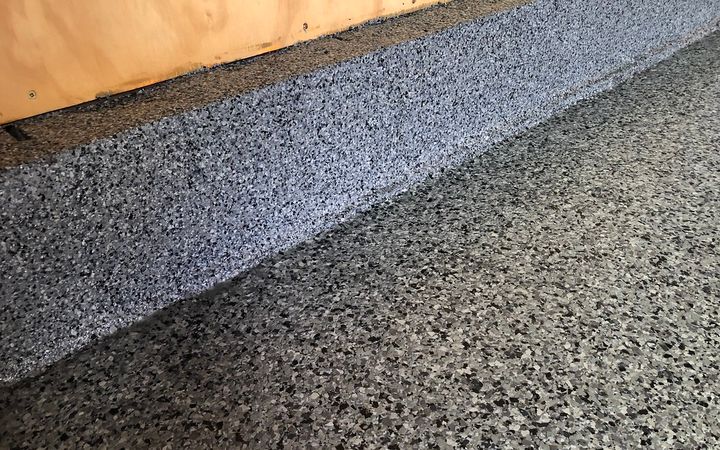
A lot of 1960s ranch houses have a step or two from the garage up into the kitchen or the laundry room. Those steps wear at the nose first. We patch the chipped edges, coat the treads and risers along with the floor, and add grit to every tread.
Kosciusko County sits in the highest of the three federal radon zones, so we’d always recommend testing a basement before you finish it. A coating seals the face of the floor, but it isn’t a radon fix. Radon also comes in at the joint between floor and wall, around pipes and through the sump. If the test reads high, a radon system goes in first, and the coating goes on around its pipe after that.
Milford is about 41 road miles southeast of South Bend, roughly 65 minutes by car, in Kosciusko County west of Lake Wawasee. That’s the far end of our area. So we plan a Milford job as a few days in a row, with the crew, the grinder and every coat on the truck, and nothing waits on a second trip. The moisture test and the quote still come first, on a visit of their own.
We also serve New Buffalo, MI, on Lake Michigan, just north of the Indiana line.
Milford has a population of about 1,684. Here is what that means for the work we do here.
| Local fact | Detail |
|---|---|
| Homes from 1939 or earlier | 37.1% of Milford's 757 housing units went up before 1940. |
| The 1960s wave | The 1960s built 18.8% of the town's homes, more than any decade since the 1930s. |
| Single houses | 82.7% are single-family detached houses, and owners live in 76.3%. |
| Radon zone | Kosciusko County sits in the highest of the three federal radon zones. |
| Building permits | Permits come from Kosciusko County's planning office in Warsaw; jobs inside Milford have added requirements. |
| Town history | Judge Aaron Perine platted the town in 1836; its name comes from a mill by a ford. |
Give us the rough size of the room, what the slab is doing now (stains, cracks, an old coating) and how you use the space. We call back with the system that fits and what would raise or lower the figure.
Epoxy, urethane cement and polished floors for plants, warehouses, kitchens, auto shops and showrooms in South Bend and Elkhart County.
Cracked, salt-pitted and spalled garage floors around South Bend repaired, left bare or made ready for a coating.
Basement slabs tested for moisture, ground and coated with epoxy, flake or polyaspartic for laundry rooms, rec rooms and home gyms around South Bend.
Concrete floors polished down to the stone, or just ground and sealed, for basements, shops, showrooms and warehouses around South Bend.
Peeling, chipped and worn epoxy floors around South Bend patched, recoated, or ground off and coated again.
Patios, porches and pool decks around South Bend coated with UV-stable polyaspartic and grit, stained, or sealed when the slab only needs a sealer.
Yes. A cottage that sits closed all winter is cold and can be damp, so we test the slab first and coat when the garage is warm and dry enough. That's usually late spring through early fall.
Both are hard on bare concrete and break it down over time. On a coated floor they stay on top, where they hose off. Keep in mind the topcoat is chosen for the chemicals that will touch it.
We grind with machines hooked to a dust collector, and we seal off the door into the house. Some fine dust still gets out, though, so be sure to cover anything stored in the garage that you want kept clean.
Yes, but it takes care. The grinding stays shallow so it can't reach the tubes, and the heat stays off while the coating goes down and cures.
A light gray or white floor bounces light back up and makes a dim shop much brighter. It shows dirt more, so a light flake blend is the usual middle ground.
Yes, the floor, not the stone. Old stone walls let moisture through at their base, so we test the floor near the wall, stop the coating a little short of the stone and seal that edge with a flexible joint filler instead of a hard film that would crack.
Some products do, for a day or two. Low-odor coatings are available, and we keep the garage aired out while the floor cures.
Quickest is a call to (574) 800-4334. Or tell us about the slab here and someone will phone you.