Garage Floor Repair in South Bend, IN
South Bend Premier Epoxy Flooring does garage floor repair in South Bend, IN, from hairline cracks to slabs pitted by road salt. Over 28% of South Bend homes date from before 1940, and their garage floors have taken a lot of winters. We also work in Mishawaka, Granger, Osceola, Niles and Edwardsburg.
Request a quote
Tell us which floor and what it looks like today. We will call you back.
Given that 28% of homes were built before 1940s, just imagine how much damage decades of salty slush off cars do to the concrete. That's why almost always when we look at the floor, it has to be repaired from these decades of damage.
- Cracks chased open before they are filled
- Salt pits packed, then ground flat
- Control joints left free to move
- A slab that sank goes to a concrete contractor
- Repairs that stay bare or go under a coating
Estimate your garage floor
Typical prices per square foot for South Bend jobs, from the source below. Your quote follows a look at the job.
$1,320 to $3,080
Call (574) 800-4334 for your priceAt a glance
| Item | Typical figure | Source |
|---|---|---|
| Crack repair, US | $150 to $1,000 by length and depth | Fixr, garage floor repair cost |
| Salt damage repair, US | $200 to $750 | Fixr, garage floor repair cost |
| Pitting or spalling, US | $500 to $2,000 | Fixr, garage floor repair cost |
| Resurfacing, US | $3 to $7 per sq ft | HomeGuide, garage floor coating cost |
| Repair plus epoxy coat, local | $8.30 to $13.55 per sq ft | Homewyse 46601, 2026-09 |
| South Bend homes built before 1940 | 28.3% | Census ACS 2020-2024, B25034 |
Garage Floor Damage We Repair
Five things an aging garage slab does, and what each one needs before it gets worse.
Hairline Cracks
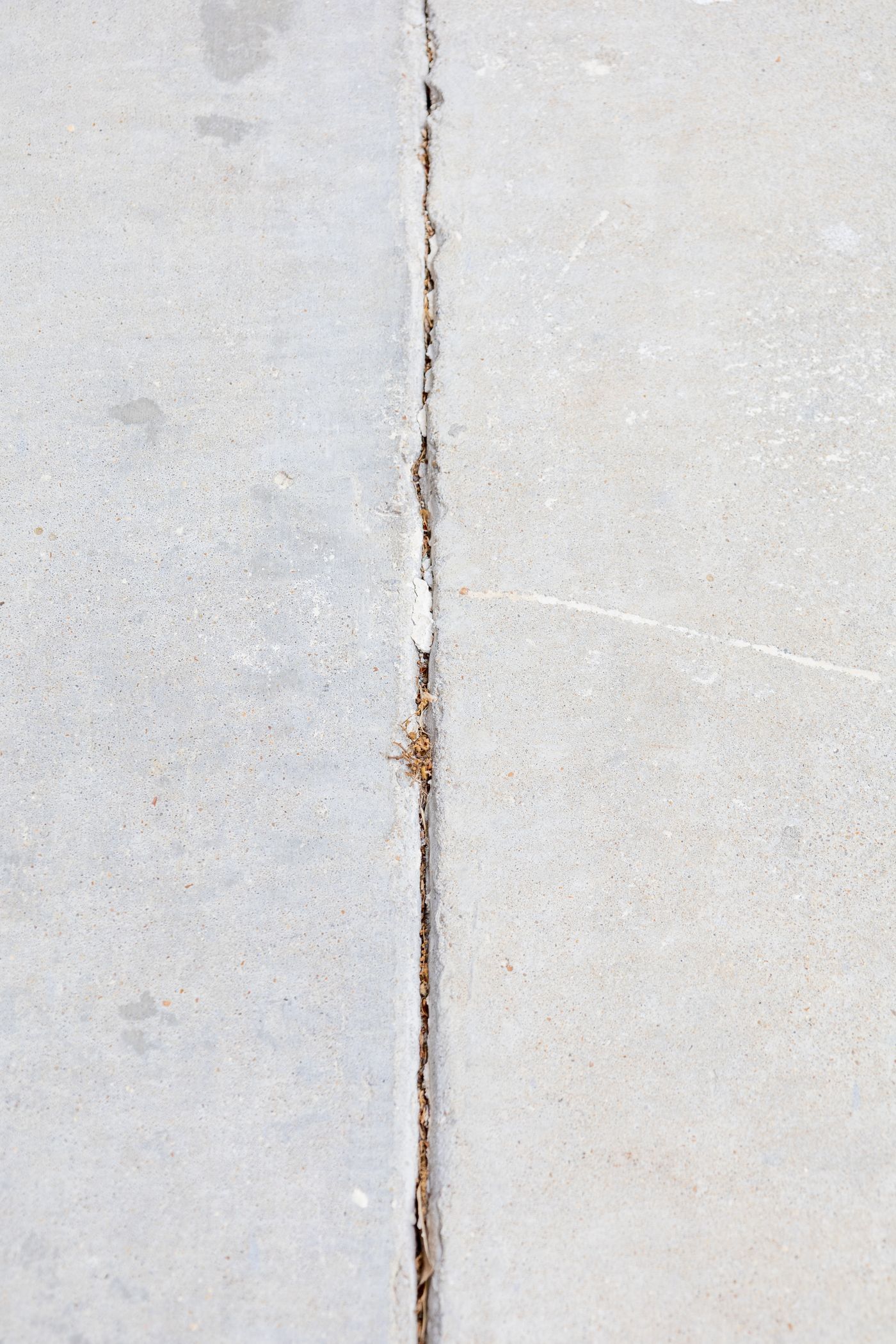
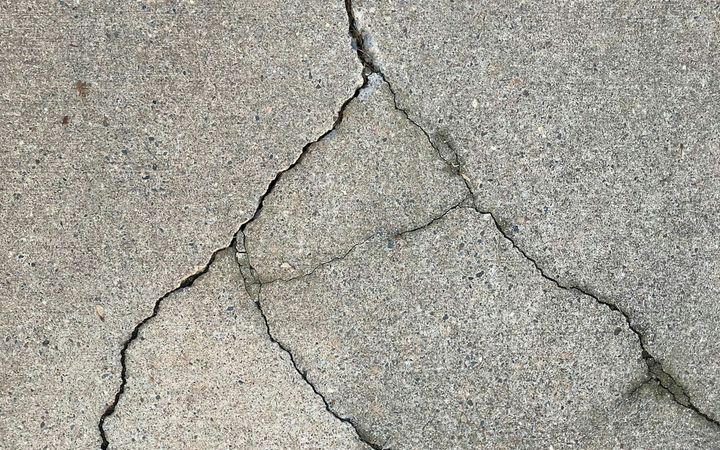
Keep in mind that sooner or later almost every slab will get them. What we do is cut the crack wider, vacuum the dust out and fill it with filler. Afterwards we let it stay for a bit.
Salt-Pitted Concrete
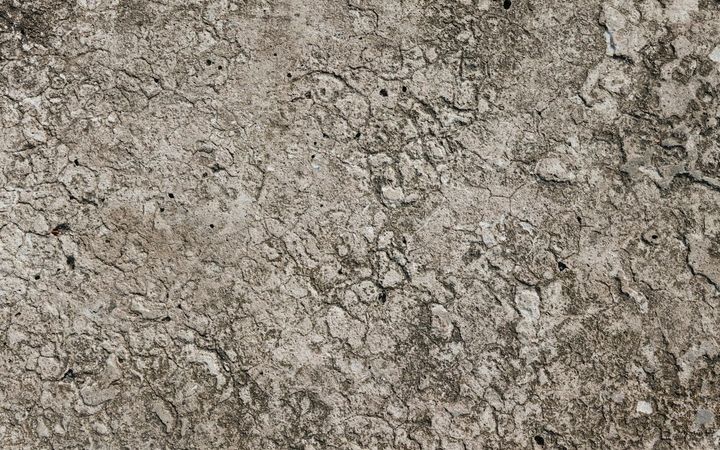
Brine off the cars pools in small hollows all winter, and chloride salts attack the top of the slab. The pits get cleaned out and packed with a thicker filler. Then the floor is skimmed and ground so no hollow is left to hold water.
Spalled and Flaking Surface
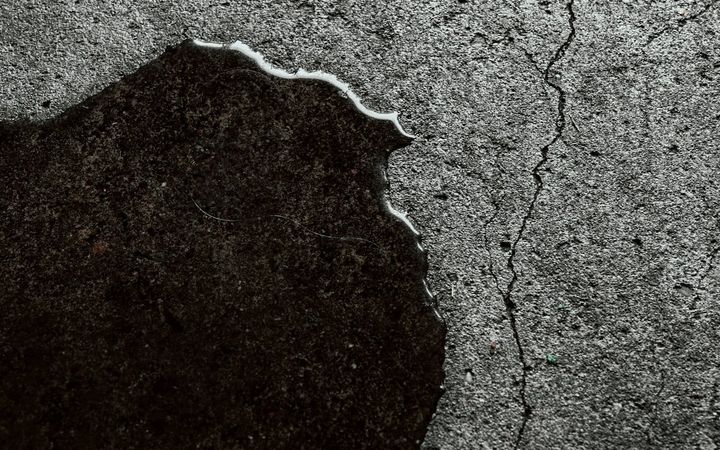
That usually happens when water goes into it and freezes. It might seem like you need to cover it and it will be fixed. But the problem usually is somewhere deep. You need to grind away the loose concrete to reach the solid surface first.
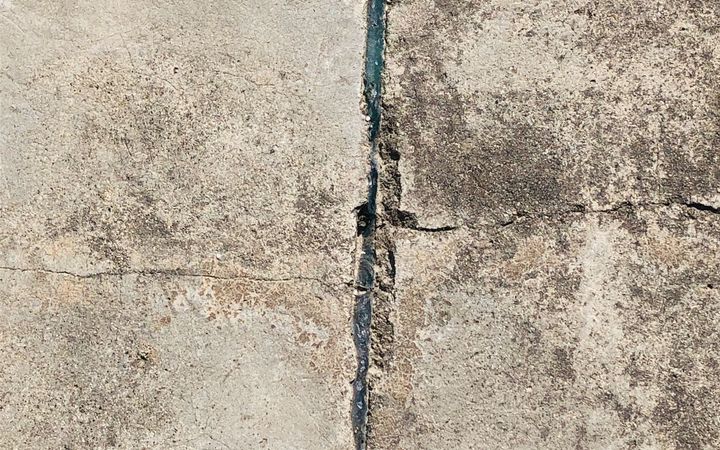
Control Joints
These saw cuts are planned weak lines. The slab is meant to crack along them, not across the middle. We clean them out and pick the filler to suit the joint. Where the slab still moves, it gets a flexible one.
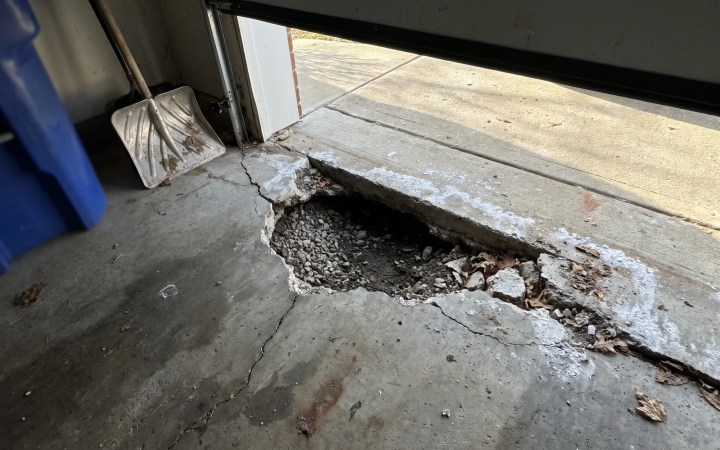
Holes and Chipped Edges
A dropped jack stand or a shovel blade at the apron leaves holes and broken edges. Small ones take an epoxy patch ground flush with the floor. A broken apron edge gets squared off before it is patched, so the repair has a clean shoulder.
How Much Does Garage Floor Repair Cost?
Garage floor repair usually costs $150 to $1,000 for cracks and $500 to $2,000 for a pitted or spalled floor, going by national figures. Repairing and coating the floor in one job runs $8.30 to $13.55 a square foot in South Bend.
| Repair | Range |
|---|---|
| Crack, US | $150 to $1,000 |
| Salt damage, US | $200 to $750 |
| Pitting or spalling, US | $500 to $2,000 |
| Sunken or uneven section, US | $500 to $2,500 |
| Resurfacing, US | $3 to $7 per sq ft |
| Repair and epoxy, 440 sq ft | $3,660 to $5,970 |
Rows marked US are national cost guide figures, with cracks priced by length and depth and salt damage cleaned and patched. The last row is for zip 46601, 2026, on an etched slab with no grinding; the quote adds grinding.
Small crack jobs are often priced by the hour rather than the area. Two quotes for the same crack can sit far apart for that reason, so ask how each one was worked out.
If you decide to fix it properly, do it in one go with epoxy as well, instead of keeping it half fixed and exposed to the damage, especially if it’s your property. If it’s rented, then of course it’s a different story.
How a Garage Floor Crack Gets Repaired
- Read the crack. A straightedge goes across it. If one side sits higher, the slab moved, and filler will not fix that.
- Chase it open. A crack-chasing blade turns a hairline into a groove with clean walls. Filler poured into a raw hairline sits on dust and lets go. In our view this is the step cheap jobs skip.
- Vacuum, then fill. Dust out first. The filler then goes in slightly above floor level, so the grinder has something to cut.
- Grind it flush. Once the filler has cured, the grinder takes it level with the slab. Under a solid color or metallic coat a filler that sagged even slightly shows through, so this pass gets a second look.
- Seal or coat. A bare floor can take a clear sealer over the repair to keep salty water out. A floor getting a coating moves on to its base coat.
A garage floor crack and salt-pit repair should be done when a crack shows up on a garage floor. The crack should be chased, which means widening it with a saw blade so that the filler can grip both sides, and the joint can be controlled and hopefully not spread any further. Control joints are straight cuts made into a slab so it cracks along them.
Patch It or Coat It?
Repair and Leave It Bare
Visually, the difference would be that filled cracks would look darker than the concrete around them. And if it doesn’t concern you, then you could go with this option and maybe consider doing the coating later on.
Repair Under a Coating
If the floor is getting epoxy or polyaspartic anyway, do the repair in the same job. We would not coat over a crack that is still moving at all. The local epoxy price above already counts crack repair, and a flake floor hides filled cracks that bare concrete would show.
What affects the price
Every job is quoted after we see it. These are the things that move the number up or down.
Crack length and depth
A short hairline takes minutes, a wide crack across the slab takes hours
Salt pits
A pitted floor gets packed and skimmed before it is ground flat
Movement
A section that sank needs leveling or slabjacking, a bigger job than filling
Coating after
A repair under flake can be rougher than one left on show
Get a quote on your garage floor crack and salt-pit repair
Give us the rough size of the room, what the slab is doing now (stains, cracks, an old coating) and how you use the space. We call back with the system that fits and what would raise or lower the figure.
Garage Floor Crack and Salt-Pit Repair in nearby areas
Garage Floor Crack and Salt-Pit Repair FAQs
Can I fix a garage floor crack myself?
If it's a thin crack and it does not grow, you can use a kit to fix it. But if a coating is planned afterwards, you would need crack chasing. We cut the crack wider with a saw, so the filler has two clean sides.
What do you fill garage floor cracks with?
For most of the cracks and pits we use epoxy filler or polyurea filler. For deeper spalls we might use cement patch mortar.
Do hairline cracks in a garage floor need fixing?
If they are on a bare floor, it's usually not urgent. If you decide to do a coating, they should all be filled before that to prevent water getting in.
Will the cracks show through a new coating?
If the crack is still moving, it can open again. If it has stopped moving, it can usually be hidden under flake, which is colored chips scattered over the wet coating.
Can a crumbling garage floor be repaired?
If it breaks under the screwdriver, then it will need to be cut out. A concrete contractor breaks out the bad concrete and pours new concrete in place, which is called repouring. Then in 28 days we will do the coating.
Request a quote
Quickest is a call to (574) 800-4334. Or tell us about the slab here and someone will phone you.